Friday, May 6, 2016

Blu-ray Review: Sharkansas Women’s Prison Massacre

I admit to having a weakness for shark movies. That’s led to me viewing such masterpieces as Sand Sharks, Snow Shark, Swamp Shark and Avalanche Sharks. Yes, sharks can turn up anywhere, even in tornadoes. Sharkansas Women’s Prison Massacre is not only a shark movie, but is also a women’s prison movie. It’s a two-for-one deal. And it is surprisingly enjoyable, much better than the majority of shark movies. It stars Dominique Swain, Cindy Lucas, John Callahan, Christine Nguyen, Amy Holt, Corey Landis and Traci Lords, and was directed by Jim Wynorski (certainly not known for making great films; he directed Ghoulies IV, for example).

Explosions free some sharks from an underground ocean, and they surface to terrorize a group of women on work detail from the local prison. Is it that only sexy women are criminals? Or that only the sexy ones get caught? Or perhaps only the sexy ones are permitted to go out on work detail? Well, whatever, the point is the women look good. They’re out clearing stumps from a section of swamp (why the warden would want this done is never quite explained). But the girls take a break to drink from their water bottles (in slow motion, of course), and also pour some of the water on their white tank tops. When one girl sees a shark coming, she has time to say, “You gotta be kidding me,” but not time to take two steps back out of the water.

Honey (Dominique Swain), Anita’s hot red-haired girlfriend, shows up to break Anita (Cindy Lucas) out, and takes the prison employees hostage. So there is a whole plot outside of the weird sharks. They drive to a small house in the swamp, where three of the girls get in a hot tub. They’ve somehow acquired bikinis, but hey, shouldn’t they be naked? What kind of exploitation flick is this? Anyway, soon it is clear that these sharks are not confined to water, and everyone must team up against this larger threat.

Meanwhile, two detectives (played by Traci Lords and Corey Landis) are searching for… Wait, what are they searching for? I’m not sure, but soon they are on the trail of the escaped female convicts. And they too come into contact with what one character calls sharkosaurus.

This movie has fun with its subject, but is not a goofy comedy. It does approach the characters and situations with enough seriousness and sincerity to make us interested. This is partly to be credited to the cast, who turn in believable performances, not always an easy feat in films like this. I especially like John Callahan as Carl, one of the prison employees. This movie also takes a lesson from old monster movies, as it doesn’t show too much of the monster too soon. It also certainly leaves room for a sequel, and if one is made, I will definitely be excited to see it.

Special Features

The Blu-ray disc contains a commentary track by director Jim Wynorski and cast members Cindy Lucas and Amy Holt. Jim mentions how the producer and production designer play the guys driving through the swamp at the beginning, and how the vehicle really did get stuck in the swamp. They talk about shooting in Florida, where it was surprisingly cold, as the girls mention many times. Jim mentions that the film was made for American television. Ah, so that’s why there’s no nudity. They do get onto several tangents, and as Jim says at one point, it isn’t the most informative commentary track ever, but it’s fun.
There is also a photo gallery, which is presented as a slide show running approximately four minutes. Also included is the film’s trailer (which has a shot of a great white shark in the ocean, which has nothing to do with the movie).

Sharkansas Women’s Prison Massacre was released on Blu-ray on May 3, 2016 through Scream Factory, a division of Shout! Factory.

Monday, May 2, 2016

DVD Review: She’s Beautiful When She’s Angry

She’s Beautiful When She’s Angry is a documentary about the women’s liberation movement, focusing on the 1960s and 1970s when groups like The National Organization For Women were getting started. It opens, however, with some footage of the current battle in Texas over access to abortion clinics, showing immediately that this is a continuing struggle, that the issues dealt with in this film are not things of the past. That’s an important point to make from the start.

The film shows how the women’s movement emerged from the anti-war and civil rights movements, and shows what the women learned from the civil rights movement. The motivation for most of the women in founding these organizations was employment, putting an end to employment discrimination, but of course many other issues soon sprang from these initial meetings. There is a lot of interesting footage from this time. It’s so depressing to see footage of men within the student movements reacting negatively to the emerging women’s movement. Even the very people you’d think they’d be able to count on for support initially reacted negatively.

What’s wonderful is that the film includes interviews with many of the women in leadership positions within the movement, so that we see footage of them from that time and then footage of them now. People like Jacqui Ceballos, Muriel Fox, Mary Jean Collins, Kate Millett, Rita Mae Brown and Heather Boot are interviewed, and these interviews really function almost like narration. The women are allowed to tell their stories, and thus the larger story, and in the process do away with the need for an outside narrator. Heath Booth says: “The big insight of the women’s movement was that personal is political. Problems that you felt were happening to you alone probably were your fault. But if it’s happening to other people, then it’s a social problem and not just a personal problem.” And Susan Griffin in an interview reads some of her poetry. What might be surprising is the wonderful humor to the poetry of the movement (surprising because usually when people are involved in a movement, they take themselves rather too seriously).

This documentary presents footage of various demonstrations, including some I was previously unaware of, such as the burning of college degrees to show that the schools had taught them nothing of women’s place in history and art. There is also footage of early meetings of women’s organizations. Another thing I had never heard of before was The Chicago Women’s Liberation Rock Band. There is footage of them performing, and this band is actually really good. (I just looked them up, and apparently they did release one record. I need to get a copy of this on CD.)

I also had no idea about the child care bill that Richard Nixon vetoed. Just imagine if that bill had gone into effect. Would things be different now? Perhaps. But the film returns to the current battle in Texas, and as on interviewee says, “The bitter lesson is that no victories are permanent.”

Special Features

This DVD contains a lot of bonus footage. There is footage on the first feminist comic book, with an interview with its creator, Trina Robbins (who is immediately lovable). There is also some material on the sit-in at The Ladies’ Home Journal, featuring interviews with a few of the women involved and including some great news coverage from the time. Other subjects tackled in the bonus footage include marriage, civil rights, organizing demonstrations, and poetry readings (including a funny anecdote involving Allen Ginsberg). The film’s trailer is also included.

She’s Beautiful When She’s Angry was directed by Mary Dore, and was released on DVD on March 1, 2016 through Music Box Films. By the way, I love this film’s title.

Thursday, April 28, 2016

Blu-ray Review: The Gong Show Movie

The Gong Show was a strange talent show that ran on NBC in the 1970s, hosted by Chuck Barris and featuring several running gags and characters, such as the Unknown Comic. If any of the judges disliked an act, he or she would bang the gong, and the person would have to stop in the middle of performance. The Gong Show Movie, which was released in 1980, stars Chuck Barris as himself, a man who claims he wants to escape from his dubious success due to exhaustion. It was written by Chuck Barris and Robert Downey, and directed by Chuck Barris. And it’s sort of a fake behind-the-scenes look at the show, with shots of auditions and tapings, though it does include some actual footage from the program (some of which was not aired originally due to censorship).

Chuck Barris is stopped wherever he goes by people who wish to perform on the show. It must have been annoying for Barris to deal with that, since at times it’s annoying to us to have to watch it. But there are some good moments within that, such as Phil Hartman (credited as Phil Hartmann) in one of his earliest performances as a man with a gun at the airport wanting to do an impression for Barris. And Vincent Schiavelli plays a thug who is upset that his mother was gonged on the show, but who then makes an appearance himself. I’m always happy to see Schiavelli. And I do like the nurse who bets on which patients will survive and which won’t. She tells Barris she’s a fan, saying, “You know, I watch that stupid show of yours every day before I go to work… And it’s the dumbest thing.” That’s a great moment.

There are some other surprising and clever moments, like when the doctor suddenly appears on piano in the kitchen of the restaurant, backing the cook who is trying to sell Barris on his singing performance. And then the maĆ®tre d’ (played by Rip Taylor, who guest starred in one of my favorite episodes of The Monkees) tells Barris and Red (Robin Altman) to take their time on deciding what they’d like to eat, “I’ll be back in an hour and a half.” And in that same restaurant scene, the network executive shows up and tells Chuck: “As a representative of the network, I’m responsible for taste, religion, politics and money. Your responsibility is to the people.” There are some cute touches also, such as the fake newspaper which can be seen at one point and which reads, “Gong Movie Smash Hit, Barris Next Fellini!

But there is a lot of physical comedy that falls flat. And many of the gags just aren’t funny. Also, out of nowhere, Chuck Barris suddenly says that he and Red should break up. But who cares? This isn’t a relationship story, and this breakup comes out of nowhere and likewise goes nowhere. So the film is a mixed bag. Throughout the movie, Chuck Barris keeps saying he wants to get away from the show, and there are times when you might feel the same way about the movie. But if you stay with it, there are definitely some rewards (such as Phil Hartman’s cameo late in the film). By the way, Chuck Barris, in addition to co-writing, directing and starring in the film, also wrote the movie’s songs, including “Sometimes It Just Don’t Pay To Get Up” and “Why Me Oh Lord.”

Special Feature

The disc contains an audio commentary track by pop culture historian Russell Dyball, who talks about the many actors who show up in the film, and about the people who appeared on the television show. He also talks about some of the criticism of the film and the show.

The Gong Show Movie was released on Blu-ray on March 29, 2016 through Shout! Factory.

Wednesday, April 27, 2016

Blu-ray Review: A Tale Of Two Cities

The wonderful 1980 television movie version of A Tale Of Two Cities is now available on Blu-ray, thanks to Shout! Factory. It stars Chris Sarandon as both Charles Darnay and Sydney Carton, a young Alice Krige as Lucie Manette (it’s still hard for me not to see her as the Borg Queen), Peter Cushing as Dr. Manette, Kenneth Moore as Lorry, Barry Morse as The Marquis St. Evremonde, Flora Robson as Miss Pross, Nigel Hawthorne as Styrver, and Billie Whitelaw as Therese Defarge.

During the opening credits we follow the carriage of the Marquis St. Evremonde, which then runs over a young boy, killing him. The Marquis says to the crowd gathering, including the boy’s father: “Really, it is extraordinary to me that you people cannot take care of yourselves or your children. Always in the way.” And he expresses concern that his horses may have been injured in the mishap. This of course doesn’t sit well with the people, and a title card reads, “Paris… Just before the French Revolution” (for those who haven’t read the book). In voice over we get the famous opening lines from Charles Dickens’ novel: “It was the best of times, it was the worst of times…” And we see contrasting images of the very rich and the very poor.

The film then takes us to England, where Lucie learns that her father is still alive in Paris. She travels there to retrieve him, and he’s been locked up so long that he doesn’t recognize her at first, but for the hairs of hers that he kept with him all these years. It’s a touching moment, and both Peter Cushing and Alice Krige are quite good. They meet Charles on the boat to England after Charles renounces his titles and properties. But of course he is first charged as a spy in England, and then later as a traitor in France. In England, it is partly his strikingly similar appearance to the lawyer Sydney Carton that frees him. Chris Sarandon does a remarkable job creating two very distinct characters, and the moments where he is on screen as both characters look really good. I was thinking, considering the time when this was made, that those shots would look clunky, but they don’t.

It has been decades since I read the book, and I had forgotten about any humor in it. For example, the banter between Carton and Stryver, who also aims to marry Lucie, is quite funny. And Chris Sarandon and Nigel Hawthorne do a good job of not punching up the humor too much. This is such a great story, and this version is completely enjoyable. Sure, they probably should have hired a few more extras for the storming of the Bastille, but that’s a minor complaint. This movie does a great job of showing that people on both sides of the French Revolution were rather horrid, how power can turn people into monsters, and how mob mentality is a frightening thing. But at the heart of it is a love story, of two men who love the same woman.

This television movie is presented in the widescreen format, which of course presents some questions. Obviously, in 1980 it was shown in the full screen format, and as it was a television film, I can only presume that it was shot for that aspect ratio. Apparently, when it was released on DVD a while ago it was also in the full screen format. And yet, it looks perfect in the widescreen format; it doesn’t seem to have been cropped on the top or bottom. So I am curious about how it was shot.

A Tale Of Two Cities was written for television by John Gay and was directed by Jim Goddard. It was released on Blu-ray on April 12, 2016 through Shout! Factory. This disc does not contain any special features.

Blu-ray Review: The Sicilian

The Sicilian stars Christopher Lambert as Salvatore Giuliano, a bandit who becomes a hero to the people of Sicily. It was written by Steve Shagan (who also wrote Primal Fear), based on the novel by Mario Puzo, who of course also wrote The Godfather. The book in fact is sort of a sequel to The Godfather, with Michael Corleone appearing at the beginning. The film version, however, opens with Professor Hector Adonis (Richard Bauer) visiting Aspanu (John Turturro) in jail, and does not include the Corleone connection. The film was directed by Michael Cimino, who is known mostly for directing The Deer Hunter, for which he won the Oscar. And now the director’s cut has been released on Blu-ray (it is approximately thirty minutes longer than the theatrical release).

After the brief first jail scene, the movie goes back in time to tell the story of Salvatore Giuliano and his rise in popularity and then his fall. He and Aspanu are carting a coffin through the countryside when stopped by the police, who discover that the coffin contains stolen grain that Giuliano intends to distribute among the peasants. The ensuing altercation results in a policeman being shot and killed, and Giuliano being shot as well. After stealing two horses from the estate of Prince Borsa (Terence Stamp), they flee to the protection of some priests. This is only the first time that Giuliano seems to cheat death, and his luck is part of what draws people to him. While healing in the care of the priests, he gains a new sense of invulnerability.

At the same time, we see the power of Don Masino Groce (Joss Ackland). There is a scene where Don Masino goes to the University of Palermo to ask that his nephew be given a degree to become a surgeon. One person at the university tells him no outright, and then after Don Masino has left, Professor Adonis turns to that man and tells him he’ll have to leave Sicily, that no one says no to Don Masino. One of the interesting aspects of this film is the paternal feelings that Don Masino has toward Giuliano, even before meeting him. Giuliano is the sort of son Don Masino wishes he had. At the same time, you know a confrontation is brewing that cannot end well for both men.

The film is burdened with some clunky dialogue, like “Don’t worry, opposites attract, they say”; “Well, if you want to be an angel, you’ve got to change your shoes” and “What are you going to do?”/”Save the world, what else?” (all of those examples being from the same scene). But there is some good dialogue as well. Like when Giovanna asks Giuliano why he doesn’t run for president of Sicily, Giuliano responds: “I’ve killed too many people. Or maybe not enough.” And later when they are driving through the streets of Palermo, and Giovanna worries that he’ll be recognized, Giuliano says, “I don’t look like me all dressed up, do I?” She responds, “Well, you don’t look like someone who wants to help the poor.” Giuliano then says: “I bought you that dress because you are poor. I bought this suit because I am poor.” And when Aspanu warns Giuliano that a man will betray him, Giuliano responds: “Betray me? Only a friend can do that.

Certainly, the film isn’t as good as The Godfather (though it is much better than The Godfather Part III), and Christopher Lambert is no Al Pacino. But it’s an enjoyable film, with plenty of good moments. And it’s beautifully shot. Alex Thomson was the director of photography. Thomson also was the cinematographer on such films as Excalibur, Labyrinth and Kenneth Branagh’s Hamlet. And Terence Stamp is excellent, as always. He always brings something unexpected to the roles he plays. For example, check out his reaction when Giuliano and his men show up at his estate to rob his guests of their valuables.

The Sicilian was released on Blu-ray on March 29, 2016 through Shout! Factory. The disc does not contain any special features.

Friday, April 22, 2016

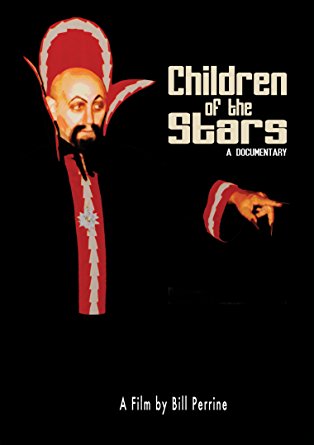
DVD Review: Children Of The Stars

I’ve always thought you had to be a bit of a kook to join a cult, with equal parts lunacy and sadness dominating your personality. But I’ve also always found these people fascinating. Children Of The Stars is a documentary film about Unarius (meaning “universal articulate interdimensional understanding of science” – oh boy!) and its members (or students, as they are referred to). The film focuses on several members (none of whom are young, interestingly), who are allowed to tell their stories through a series of interviews.

The film begins with some images from science fiction, with a man telling us how we have waged war on Martians. “Call it sci-fi, but it’s real,” he says earnestly. And that’s one defining and interesting characteristic about the Unarius folks: they don’t believe there is any such thing as imagination; they believe it’s all memory. And so they will say things like “Star Wars is real.” And they believe that Gene Roddenberry, through the Star Trek series, was actually giving us information about real events. They also believe very strongly in past lives, and in a confederation of planets. Unarius student Billie McIntyre says: “Every year in October we have a Conclave of Light, welcoming the brothers of the confederation to land. It’s active with thirty-two other planets.” Sadly, she informs us that Earth has yet to join the confederation. “But we will soon,” she promises.

The Unarius Academy Of Science was founded by Ernest Norman (known as Raphiel or The Moderator to the cult members) and Ruth Norman (referred to as Uriel by her faithful followers) in the 1950s. And after Ernest’s death in 1971, Ruth became the leader, and the members seemed to worship her, calling her an archangel. Ruth was a nut, but she was all about a peaceful existence for people, and you can’t argue with that. Though the film largely follows the viewpoints of the members, it does give us some background information on Ruth Norman through an interview with a sociologist. And a lot of their ideas are presented in snippets of science fiction films that the cult members made themselves. Yes, these people make their own science fiction films. (One failing on the part of this DVD is to not include these films as bonus features. That would have been great!)

They believe that they have had past lives on this planet and other planets. Apparently Ernest and Ruth both come from the Planet Aries. One of my favorite moments in the film is the series of paintings of Ruth’s past lives – everyone from Queen Elizabeth I to Johannes Kepler to King Arthur. Unarius student Tracey Kennedy tells us that when she met Charles (whom they refer to as Antares), he told her, “I know you from Atlantis.” Unarius student Dan Smith, however, has the funniest line of the film. When describing meeting Ruth at a dinner, he says: “Wow, this is an archangel, and she’s telling me I should have some custard.” But he does get a bit of competition from Kevin Kennedy, who says: “Martians did interbreed with peoples on our world. That is what started the Chinese civilization.” Ah! That of course prompts the question, Can Martians drive?

There is a lot of great stuff in this documentary, and yet I found myself wanting more. For example, there is nothing on the current structure of the cult. Ruth Norman died in 1993, so who has been running the show since then? And is there some sort of hierarchy? And how is the group funded? Toward the end, a few of the members talk about how and when they joined, but I wanted more of that. These folks are allowed to tell their stories, which are certainly entertaining, but the interviewer never puts them on the spot. He is very gentle with them, and that ends up being a weakness of the film. Also, I found myself wondering about ex-members. That might be outside the scope of the film, I understand, but I’m curious and I wish at least one ex-member had been interviewed. Or has no one ever left the group?

Special Features

The DVD contains approximately twenty-six minutes of bonus footage, most of it from interviews in which members focus on their problematic past lives. One guy talks about how his past lives affect his marriage. It must be exhausting to be crazy. One woman talks about her past life in Germany: “She was an opera singer also that entertained Hitler.” But this woman seems old enough to have been alive during World War II in this lifetime. And guess what, she is. She explains this, sort of: “Now I was in this body at that time, but I also had another body at that time, out there.” Uh, what? She then adds, “I probably shouldn’t have brought it up.” Another guy went to see Gladiator (the Russell Crowe movie) and spotted himself – well, one of his past selves – in the arena. (Hey, that extra used to be me!) The sociologist does touch upon the question of where the cult gets its money.

The last couple of minutes are actually a trailer for the film, which is tacked onto the bonus footage rather than included as a separate special feature.

Children Of The Stars was directed by Bill Perrine and was released on DVD on March 8, 2016.

Monday, April 11, 2016

DVD Review: Strange And Familiar: Architecture Of Fogo Island

Strange And Familiar: Architecture On Fogo Island is a wonderful documentary about a small community working to maintain its particular personality, history and culture while also drawing in new people via more contemporary architecture. Fogo Island is located off the coast of Newfoundland, and this film features some stunningly gorgeous shots of the area. Right away the documentary introduces us to Todd Saunders, an architect who grew up in Newfoundland and who returned to take on this special project, and Zita Cobb, the woman behind the Shorefast Foundation and the project.

Zita Cobb made quite a bit of money through her job, traveled the world, then returned to Fogo Island with the idea of building an inn there. She tells us, “I think that people are made of the place they’re from.” She talks about how people are tied to the place of their birth, particularly if they’re island people. And she wanted to express the feeling of the place in a contemporary way, and to attract contemporary artists from around the world to the island to work. And so it wasn’t just the inn, but also a series of smaller structures to house artists that were built there. Todd shows us some of these places built for artists, touching upon the idea of architecture that is both familiar and strange, how he attempted to put the old idea of function becoming form into the contemporary architecture. One building was designed specifically for writers, and the whole place is like a giant desk. It’s remarkable.

There is a wonderfully casual and friendly feel in the way both Todd and Zita talk to us about the place, about the architecture and about the project, as if they’re speaking to people they genuinely like, people they care about. And it’s such a natural way of speaking, even though of course this project is of tremendous importance, not only to them, but to their families and the community.

The film also follows the progress of the construction of the inn, and we meet some of the designers and workers, and learn that whenever possible local craftsmen and local materials were used. The detail is great. We even meet the people designing and making the quilts. And what’s striking is that all of these people, in these various creative areas, all have the same goal, and truly feel connected. It’s a beautiful thing. I want to go to this inn (and I’d like to stay in room 22 – you probably will too once you see this film).

Strange And Familiar: Architecture Of Fogo Island was directed by Katherine Knight and Marcia Connolly, and was released on DVD on March 29, 2016 through First Run Features. The DVD includes a photo gallery, featuring images of some of the structures.

Blu-ray Review: Falling Down

When Falling Down came out in 1993, I was alarmed by how much I was able to identify with the lead character, William Foster. Part of it, o...