Wednesday, October 23, 2013

DVD Review: In A Town This Size

In A Town This Size is a documentary about child abuse and the long-term effects it has had on the victims. The film relies almost entirely on a series of interviews, augmenting those only with a few still photographs. But really, nothing else is needed. The interviews themselves are completely engrossing and at times devastating.

We first meet the Dutcher family. Del and Dona Dutcher speak about their sons, Mike and Brandon, who were abused by their pediatrician, Dr. Bill Dougherty. Dona says that they thought of Bill as one of the family. “If we had a birthday party, we’d just automatically count Bill as one of the people on the party list,” she tells us. Christy, Mike and Brandon’s sister, talks about how Dr. Bill spent more time with her brothers than with her.

It is then that the filmmaker actually introduces us to Mike and Brandon. It’s interesting that we meet the other family members first, allowing them to set the scene and tone, and in the process making us worry more about the brothers. I couldn’t help but wonder if they were still alive, or if the abuse had led to suicide, or what. This is interesting, because just by ordering the interviews in that way, it gets the audience thinking about the long-term effects of child abuse, and how that childhood trauma might lead to serious troubles in their adult lives.

About Brandon, Dona says, “He said it’s not Dougherty’s fault. He didn’t do anything. He said, ‘It’s just me, I’m a terrible person.’” Brandon then tells us, “Ironically enough, I wasn’t really angry at him. I was angry at myself and the world and other people.”

We see childhood photographs of Brandon, and in them he looks incredibly sad. Dona talks about how she went back to look at all the photos once she knew about the abuse, and how the knowledge changed everything she felt about those photos. By the way, we also see a photo of Bill Dougherty with the boys.

This film is a very important and personal project for director Patrick V. Brown, for he too was abused by Bill Dougherty. During one of the interviews, he asks his subject if he knew about Patrick’s own abuse. That’s how we’re introduced to that information – an interesting way of doing it. Patrick then becomes one of those interviewed as well as the interviewer, telling the tale of his own abuse at his pediatrician’s hands.

We also meet Brown’s parents. His father, Tom Brown, talks about the respectability of Dr. Bill. He says that when the family moved to Bartlesville, everyone had told them they should take their kids to Dr. Bill. Bill is described by almost everyone as articulate, educated, friendly.

We meet several other people who were victims of Dr. Bill, including two who appear anonymously, in shadow. John Stinson says his abuse ended around the conclusion of seventh grade. Interestingly he says, “I think I outgrew him. I would have him go get us liquor.” One of the men who appear in shadow says he never told his mother about the abuse, even when she asked him straight out after a newspaper article had appeared. He says, “I could not have her thinking that that’s why I was gay.”

Most of those interviewed were child abuse victims, or family members of the victims. But there is also an interview with Dr. Richard Gartner, a psychoanalyst and author. He talks about how sexual orientation “is fairly well defined at an earlier age than most boys are in fact sexually abused.” He says that a man may “blame his sexual orientation on this experience of abuse. And that makes it almost impossible for him to have a good feeling about his own sexual identity. Because to feel okay about being gay means that in some way he’s letting his abuser wins.” This is one of the many fascinating aspects of this issue.

And there is an interview with Alan Carlson, who talks about the statute of limitations regarding child abuse. One has to bring a lawsuit within two years of the date of the alleged act. He then adds that there is a second possibility, that is to bring the lawsuit “two years from the date that the person discovered or reasonably should have discovered the injury or condition which was caused by the act.” One must also present proof that the victim psychologically repressed the memory of what happened, and there needs to be corroborating evidence. Obviously, that’s difficult to do.

One of the stated purposes of this documentary is to change the legislation regarding the statute of limitations. Be sure to watch the deleted scenes on the DVD for more information on that area.

Bonus Material

The DVD includes two deleted scenes, each being an interview. The first with is with Robert Owen, MD. His father was a pediatrician in Bartlesville at the same time as Dr. Bill. He talks about gossip in the town, and about how memories can by faulty, and that’s the reason for the statute of limitations. This is a perspective that’s not presented in the main body of the film, and is one worth thinking about. The second deleted scene is an interview with Congressman Earl Sears. Director Patrick V. Brown asks him directly about legislation regarding the statute of limitations, and Sears refuses to answer that on camera. The two deleted scenes total approximately eleven minutes.

The bonus material also includes a brief interview with Patrick V. Brown, in which someone off camera asks him why he’s making the movie. It is there he talks about the statute of limitations.

There is also a bonus feature titled “Epilogue,” which documents the film’s premiere and other screenings. It’s not all that interesting until we see one screening with a panel. There, one of the people who appeared in shadow in the film is in the audience, and he makes the decision right then to stop being anonymous. It’s a very moving moment caught on tape. This bonus feature is approximately ten minutes.

In A Town This Size was released on DVD on October 22, 2013 through First Run Features.

Friday, July 26, 2013

Aftershock DVD Review

Aftershock is an interesting film, in as much as it’s part disaster film, part horror film, and when it’s really working, it’s completely effective as both. It takes place in Santiago, Chile over the course of a few days, and it stars Eli Roth as a character known only as Gringo.

Gringo is in Chile with a friend Ariel (Ariel Levy) and Ariel’s best friend, Pollo (Nicolas Martinez). We are introduced to these three dancing at a club, where by the end of the night Gringo has passed out. The next day they are touring a vineyard, and that night visiting another club. We learn through a phone call that Gringo has a young daughter, and that he plans on being home in two days. He hits on a woman named Irina (Natasha Yarovenko), who gets a call from her own child, and so Gringo tells her he has a daughter. “I’m not surprised,” the woman says. “You’re dressed like a dad.” Gringo responds, “Ha ha ha, fuck you,” and Eli Roth’s delivery on that line is perfect.

Irina is there with, coincidentally, two female friends – Kylie and Monica, who are sisters. So the three guys and three girls hook up, spending the next day together (driving around in some kind of SUV that has fire painted on the sides and hood – uh-oh). They enjoy the day – sight-seeing, eating, swimming (seen mostly in montage). And there are some comedic moments, like when they get stuck momentarily in a funicular and Gringo says: “Jews are not meant for tragedy. We don’t handle it well.” They also go to a cemetery where we learn of underground tunnels where priests and nuns would meet for sex. If you’re thinking all of this will come into play later, you are correct.

But the thing is you actually get caught up in the fun these characters are having, so that that night when they’re at another club, and disaster strikes, it actually comes as a surprise. Even with the film’s title, and knowing what is coming, the actual earthquake, when it occurs, catches you off guard. Like Eli Roth’s Hostel, the first part of this film is about meeting girls and having fun. And then a third of the way through, when things go wrong, the movie immediately gets intense, and really doesn’t let up.

One of the guys is very seriously injured while helping someone else at the club. And there are a lot of shocks, all of which seem realistic in the face of the earthquake. They make it out of the club, but there is destruction all around, including that of their vehicle. (That’s what you get for painting flames on the side of an SUV.) Things are very tense, but the troubles have just begun. A siren warns of an imminent tsunami, and the earthquake has freed several prisoners who are now looting and terrorizing people in the area. Yes, this film does show the worst of humanity.

There are a lot of surprises, which I appreciate. But there is one twist near the end that I really dislike, and doesn’t exactly make sense considering the character. I can’t say what it is without spoiling things, so let me just say that not everyone who has been in prison is necessarily completely evil.

Bonus Features

The DVD includes a few bonus features, including a commentary track by Eli Roth and Nicolas Lopez. They talk about how they met, and about the cast. The shots of the first two parties were done at real parties, which is incredible, especially considering the opening shot of the second party, which follows a girl in and then turns around, catching a good amount of the location. The club they’re in when the earthquake hits was actually damaged in the 2010 earthquake. They talk about the T-shirts, such as how Pollo’s shirt actually foreshadows a later scene in the film. The funicular anecdote is pretty amusing. Also amusing is the anecdote of the director’s special cameo in the film. The commentary track also briefly features Lorenza Izzo on the phone.

There is also “The Making Of Aftershock,” which is just under ten minutes, and includes bits of interviews with Nicolas Lopez, Eli Roth, Ariel Levy, Andrea Osvart, and Lorenza Izzo. Nicolas Lopez talks about the real earthquake in Chile in 2010 which he experienced. He says he was interested in the randomness of life. He also talks about using practical effects rather than relying on computer graphics. There is also some behind-the-scenes footage.

The other bonus feature is “Shaking Up The Casting Process,” which begins with a couple of title cards about how there are lots of earthquakes in Chile. “The 2010 earthquake had a magnitude of 8.8 on the Richter scale.” Then while actors are changing, they replicate an earthquake and film their reactions. This is completely shitty (especially considering that some of them likely experienced the 2010 earthquake). I wish the actors had just let go and punched the woman who finally told them it was a joke. Not to mention that filming them in a dressing room is by itself reprehensible. This special feature is only two minutes long, but it put me in a foul mood.

Aftershock was written by Nicolas Lopez, Eli Roth and Guillermo Amoedo, and was directed by Nicolas Lopez.  It is scheduled to be released on DVD on August 6, 2013 through Anchor Bay Entertainment.

Thursday, July 25, 2013

My Little Pony: Equestria Girls (2013) DVD Review

My Little Pony: Equestria Girls is a full-length animated feature film, in which Twilight Sparkle has to pass through a magic mirror into an alternate world in order to retrieve her magic crown and protect Equestria.

The film opens with the ponies going to the Princess Summit. Twilight is nervous, having not yet grown accustomed to wearing a crown, or to her new wings. As always, Pinkie Pie and Fluttershy provide great comedic moments. And of course there is a message, as Twilight says, “Just because I have a crown and these wings doesn’t mean I’ll be a good leader.”

Sunset Shimmer sneaks into Twilight’s room at night and steals her crown and element of harmony, and then disappears with them through the mirror. Sunset Shimmer was a former pupil of Princess Celestia before turning cruel and going on her own path (yes, there are hints of Star Wars here). Twilight Sparkle must perform the task of regaining the crown alone, and has limited time. Of course, Spike rushes in after her.

In the alternate world, Spike is a dog, and Twilight Sparkle is a teenage girl, through still of a purplish hue. She was having trouble getting used to her wings; now she has to get used to walking on two legs. But perhaps an even bigger challenge is getting along without magic, as she has no horn.

She starts her search with what she assumes to be a castle, but which is in fact Canterlot High School. Soon she meets the alternate versions of Fluttershy, Pinkie Pie, Apple Jack, Rainbow Dash and Rarity.  Of course, that got me wondering why there isn’t already an alternate version of Twilight at this school. That question is addressed later when Pinkie Pie asks Twilight if she has a twin sister in the city. (Though it is odd, and rather convenient, that all the others go to the same school, with the one exception of this world’s Twilight.) Other characters from Equestria have their counterparts in this world as well, including Principal Celestia and Vice Principal Luna.

Twilight Sparkle has to run for Princess of the Fall Formal in order to regain her crown. Her only opposition is Sunset Shimmer, who acts as the school bully.

The film has several musical numbers, the first being about learning to adapt to a new world (like any kid going to a new school). Twilight sings, “Everything’s confusing when it seems so new.” Later the girls perform a musical number in the school cafeteria as they try to unite everyone behind Twilight. And the theme of the magic of friendship is addressed. In this one, Twilight sings, “I’m gonna be myself no matter what I do/And if we’re different, then I want you to be true to you.” A good message.

Later there’s actually a musical montage of the girls getting the gym ready for the formal dance. And then there’s a musical montage of the girls getting dressed. Wow, the film uses not one but both of the major 1980s montage themes.  By the way, the film’s opening credit sequence features a different version of the television program’s theme song, more of a techno dance version.

Bonus Features

This DVD has a few special features, including Through The Mirror, which is a making-of feature. It is divided into three parts. The first part, titled “The Movie,” is approximately twelve and a half minutes long, and includes interviews with Mike Vogel, Meghan McCarthy, Tara Strong, Jayson Thiessen and Stephen Davis. In this part, they talk about the story and the concept of this film, as well as some similarities to The Wizard Of Oz. Also, they talk about the new character, Sunset Shimmer. The second part, “The Look,” is about the design of the film, and is approximately six minutes. There are interviews with Ridd Sorensen (art director), Mike Vogel, Jayson Thiessen, Tara Strong, Meghan McCarthy and Kora Kosicka (a character designer). The third part, “The Music,” features an interview with song writer Daniel Ingram, who talks about giving the songs a more modern feel than those in the television series. This segment is approximately four minutes.

The bonus features also include two karaoke songs: “Cafeteria Song” and “Friends For Life.” The vocals are taken out, so you can add your own. There is also something called “Ponify Yourself,” but I actually have no idea what this one-minute snippet is supposed to be.

My Little Pony: Equestria Girls was written by Meghan McCarthy and directed by Jayson Thiessen. It stars the voices of Tara Strong, Ashleigh Ball, Andrea Libman, Tabitha St.  Germain, Cathy Weseluck and Rebecca Shoichet.

My Little Pony: Equestria Girls is scheduled to be released on August 6, 2013 through Shout! Kids, a division of Shout! Factory.

Monday, July 22, 2013

The Best Of Fridays DVD Review

Fridays was a late-night sketch comedy program that aired in the early 1980s. Admittedly a Saturday Night Live rip-off, at least at first, this show actually had a much different approach to comedy in many ways. It gave Michael Richards and Larry David their start (they’d, of course, work together later on Seinfeld), and launched the careers of several young writers, including Larry Charles. That right there makes the show worth viewing, but the fact is that Fridays had some of the funniest and most ambitious sketches of any show I’ve ever seen.

The Best Of Fridays, a collection of sixteen episodes (and lots of special features), is worth owning, if even just for The Ronny Horror Show sketch and for the Andy Kaufman episode. But there are also some great musical guests including Tom Petty And The Heartbreakers, The Stray Cats, The Cars, Pat Benatar, and The Clash (The Clash do four songs, including “The Guns Of Brixton” and “Train In Vain”). Of course, you do have to sit through two songs by KISS, a band I never found the least bit interesting. But no matter.

There are also two short films by Michael Nesmith (yes, of The Monkees). And there is a great cast, including Mark Blankfield, Maryedith Burrell, Melanie Chartoff, Larry David, Darrow Igus, Brandis Kemp, Bruce Mahler, Michael Richards and John Roarke (who is fantastic as Ronald Reagan), with appearances by Rich Hall. The show had guest stars for some episodes, but not all. Of the episodes included here, Karen Allen, William Shatner and Andy Kaufman are the stand-out hosts.

As I said, the show was admittedly similar to Saturday Night Live, and so the cast and writers addressed the similarities in the very first sketch of the first episode. Co-creators John Moffitt and Bill Lee tell the cast that they might be compared to Saturday Night Live. Then we see the cast, all dressed as popular SNL characters (bee, Conehead, etc.), as a message scrolls up the screen. What a perfect way to get that out of the way.

Fridays, like Saturday Night Live, did a parody of a news program, here called “Friday Edition,” anchored by Melanie Chartoff. (I’m sure I wasn’t the only kid to have a crush on Melanie Chartoff. And Melanie, if you happen to read this, Hi.) After the bastard Ronald Reagan was elected, Melanie says: “Following this week’s election, the presidency and the Senate now belong to conservatives. And one of the contributing factors in their victory was the influence of fundamentalist religious groups, particularly the Moral Majority led by evangelist Jerry Falwell. Although some are concerned about the effect of these groups on the political process, we on the Friday Edition feel that there is no cause for undue alarm. This is not the first time that the church has injected itself into politics. Why, just look at the Spanish Inquisition, the Salem witch hunts, and the takeover of the Iranian government by fanatical Muslims. Now, doesn’t that make you feel just a bit better?” Yes, I love her. In another news segment, in a story about a senator who switched parties, she says that the senator “said that he’d been dressing as Republican in private for quite some time.”

The most famous sketch on Fridays was the one in which Andy Kaufman broke character and refused to go on, saying that he felt stupid playing stoned. The sketch featured three cast members at a restaurant with Andy Kaufman, and each of the four was to get up and go to the bathroom to get stoned. When Andy returns to the table, he brings the sketch to a halt. Michael Richards then gets up, retrieves the cue cards, and plops them down on the table in front of Andy. And from there it starts to get violent, and the show suddenly ends. (By the way, at the beginning of the episode, the announcer screws up and says “Larry David” over the photo of Melanie Chartoff, then corrects himself. Melanie misses the chance for a joke when she introduces herself at the beginning of the news segment; she should have said, “Good evening, I’m Larry David.”)  The show continued the joke into the following episode, with Billy Crystal asking if the Andy Kaufman sketch was real, and then having his bodyguard tackle anyone who gets close to him. Andy Kaufman later makes an appearance, reading a prepared explanation, but then breaking again and saying he can’t do it, once again putting into question whether it was planned or not.

It’s fairly daring stuff for a sketch comedy show. But my absolute favorite sketch – probably my favorite sketch ever from any show – is The Ronny Horror Show. A parody of The Rocky Horror Picture Show, it places Ronald Reagan in the Frank N Furter role, with the Transylvanians being conservatives (I admit, I love their fur boas). Brad and Janet are on their way to an anti-nuke rally, but stop in at the castle to use the phone. It really follows the film, even beginning with the lips singing “Politicians Double Dealers” in place of “Science Fiction Double Feature,” with the line, “It’s the eighties Ronny Reagan horror show.” They went all out on this one. The props, the costumes, the makeup – everything is exactly right. And it’s a musical, with several songs, and the songs are really good and completely hilarious and biting. In the take on “The Time Warp,” Riff Raff (George Bush Sr.) sings, “We have seized control.” And then Ronald Reagan in the take on “Sweet Transvestite,” sings, “I’m just an arch-conservative, anti-intellectual chief executive from California.” Brilliant, eh? And when Eddie comes out of the freezer, it’s Nixon on the motorcycle, singing “Whatever happened to Watergate?” When Ronny unwraps his creation, it turns out to be a black militant, and this is when things get even more interesting. Reagan is flabbergasted, saying this isn’t what he created. But Janet tells him, “He is your creation, born of your narrow-minded moralistic viewpoints.” And the cast goes into another version of “Time Warp,” this time singing, “Let’s fight the system again,” as everyone turns against Ronny. So yes, it has a positive ending. The sketch is seventeen minutes long, and gets a well-deserved standing ovation from the audience.

There are lots of other sketches worth mentioning. In the first episode there is the Muppet Hunt sketch, in which people are beating Muppets in the sand, and then we go to Rodeo Drive, where coats made from Muppets are sold. “They once warmed hearts; they’ll now warm entire bodies.” That episode also has the door-to-door prostitute sketch, which is totally hilarious. “May we come in and talk to you about our product?” The Diner Of The Living Dead is another highlight, with a couple entering a diner full of zombies, and then ordering from the zombie menu: “I think I’ll have the feet, hold the toenails.” The sketch combining Star Wars and Woody Allen is wonderful, with Darth Vader trying to get Woody to give in to commercialism. The tooth fairy sketch is brilliant, and not just because Melanie Chartoff is dressed like a little girl, you perverts. Seriously, this is one of the best skits I’ve seen. Michael Richards says, “Look, there’s a TV critic, probably missing the whole point of this sketch.” And, I can’t help it, the chicken skit from episode 15 had me in tears I was laughing so hard.

One issue I do have with this box set is that I have to wonder if we’re getting the full episodes. At the end of the episode with The Ronny Horror Show, Steve Forbert is thanked. But we didn’t see him perform. The episodes vary widely in length, some approximately 48 minutes, some only 38 minutes, and one only 32 minutes, which adds to my feeling that we’re missing material.

Bonus Features

The entire fifth disc is all bonus material. The two main features on this disc are “Actors’ Conversation” and “Writers’ Conversation,” recently taped reunions, each just under an hour in length. The “Actors’ Conversation” features Melanie Chartoff, Bruce Mahler, Michael Richards, Darrow Igus, Mark Blankfield, John Roarke and Brandis Kemp, with Steve Adams acting as moderator. They tell lots of great anecdotes. The one about Ted Koppel is pretty wild, as is the Shelley Winters anecdote. They talk about some of the blunders, like when Michael Richards’ Darth Vader mask accidentally came off. They talk about The Ronny Horror Show and the Andy Kaufman episode. There is also a separate thirteen-minute interview with cast member Maryedith Burrell, in which she talks about the Los Angeles comedy scene at that time, and about the show and her fellow cast members.

The “Writers’ Conversation” features Joe Shulkin, Larry Charles, Tom Kramer, Bruce Kirschbaum, John Moffitt, Bruce Mahler and Elaine Pope, with Steve Adams moderating. They talk about the competition among the writers to get sketches on the air. One thing that was really interesting is that there was a dress rehearsal Friday afternoons in front of a live audience, and that audience’s reaction would determine how the show would go that night (in front of a different audience). Understandably, they wonder just who these losers were who had nothing better to do on a Friday early afternoon than watch a rehearsal of a show. The bathroom issues are pretty funny. They also talk about getting stoned with The Clash. But perhaps most interesting is that the writers themselves were able to cast a script as they wrote it. That’s amazing.

Also in the bonus features is “The Andy Kaufman Incident – What Really Happened?” John Moffitt explains how that sketch came about. We also get more of the actors’ conversation, specifically about this. Steve Adams asks which actors knew ahead of time. Michael Richards thought he was the only actor in the sketch who knew ahead of time. But Melanie and Maryedith also knew. We also get a little more of the interview with Maryedith Burrell.

The bonus material also includes “Friday On The News,” a segment with Paul Moyer (Eyewitness L.A.) which takes a look at the staff writers of the show and discusses the comparisons with Saturday Night Live. There is also a photo gallery.

The Best Of Fridays is scheduled to be released on August 6, 2013 through Shout! Factory.

Tuesday, July 9, 2013

Bert Stern: Original Mad Man DVD Review

The new documentary, Bert Stern: Original Mad Man, gives us a rather intimate look at the man who truly changed the advertising industry through his photography. Perhaps most famous for his photo sessions with Marilyn Monroe (he conducted what would turn out to be her final photo sitting), Bert Stern is a fascinating subject, and this documentary covers not only his career, but the women who helped shape and inspire it.

Bert Stern: Original Mad Man opens with Bert arriving at a gallery that is showing his work, and then signing books. The first impression you get of him is of a quiet, somewhat reserved man. Regarding the documentary itself, he says, “The reason I became a photographer is so I wouldn’t have to do things like this.” He says he never wanted to be in front of the camera, and he says this to Shannah Laumeister, the documentary’s director, who appears on camera with him. So right away you get the sense that is going to be a somewhat unusual documentary, for the filmmaker also becomes part of the subject.

Interestingly, Shannah Laumeister started as Bert Stern’s subject, as we learn partway through the film. When she was seventeen, she asked him to take photos of her to make her look like Marilyn Monroe. And we see those photos (she looks beautiful, by the way). They actually met even earlier, when she was thirteen and had braces. Bert says, “You looked like Jaws to me, from James Bond,” and looks directly into the camera when saying it. Their relationship developed slowly. He says to her (and to us), about taking the photos first rather than taking her, “It’s my way of having more of you. I can never get enough of you.”

Bert Stern’s two passions were photography and women, not necessarily in that order. Even when discussing his early years, he relates every subject to women. For example, he mentions that he was drafted into the army, but what he talks about is the streets being full of beautiful Japanese women, all looking for a boyfriend.

The film moves rather quickly through the early years, in order to focus on his career. Smirnoff Vodka used drawings in its advertising, and had decided to switch to photos. Bert Stern landed that job, and those photos really began his photography career. The film shows us those photos, and they’re amazing. For the shoot, he hired a woman nicknamed Teddy to be his assistant because he was attracted to her. “I didn’t want to get married,” he says. “I just wanted to make out with her.” But of course he married her, and then met another woman, Dorothy, “who was crazy, which was more what I wanted.”  Yes, Bert Stern is so casually candid in this film. And that is likely due to the fact that he was being filmed by the woman he considered his closest friend. Had this been done by someone else, we might not have gotten such an intimate view of the man.

What is also wonderful is that the film includes an interview with Dorothy Tristan. About her, Bert says he couldn’t handle her. “When she drank, she was very dangerous.” He tells an anecdote about her with a big knife. And in her interview, Dorothy actually talks about it too, however briefly. The film also includes an interview with Allegra Kent, a ballerina with the New York City Ballet, who married Bert Stern.  This film is really as much about the women in his life as about his photography career. Bert says he worshiped Allegra. (There are also interviews with their two daughters.)

This documentary is told in photographs as much as it’s told by interviews, and if ever there was a documentary that should be told in photographs, it’s this one. We’re treated to a lot of the photographs used in ad campaigns, as well as the photographs of Marilyn Monroe, Elizabeth Taylor, Richard Burton and Twiggy.  There is also some excellent footage that Bert shot of Twiggy being interviewed by Woody Allen. And there is a great interview with Twiggy Lawson.

The two most fascinating professional stories for me are his photo shoot for Lolita and, of course, his Marilyn Monroe shoots. Bert Stern had met Stanley Kubrick years earlier, and that’s how he got the Lolita job. Interestingly, it was Bert who found and bought the heart-shaped sunglasses, even after producer James B. Harris had told him to downplay the actor’s youthfulness. (James B. Harris is interviewed in this film.) As for Marilyn Monroe, he conducted two sittings with her – in June and July of 1962. He says, “I tried to kiss her, and she said no.” But it’s the photos that really tell the story, and we’re treated to many of them.

And of course, the film documents his troubles, including the use of amphetamines and his divorce. And then it talks about his comeback.

Special Features

The DVD includes a photo gallery. Each photo is labeled, with the subject and year. They’re not in chronological order, nor are they organized by subject. I usually don’t find DVD photo galleries all that interesting, but in this case, I really want more photos to be included.  There is also a short biography of Shannah Laumeister.

Bert Stern: Original Mad Man is scheduled to be released on July 16, 2013 through First Run Features.

Bert Stern died on June 26, 2013.

Tuesday, July 2, 2013

Bidder 70 DVD Review

Bidder 70 opens with a quote from Martin Luther King, Jr.: “One who breaks an unjust law must do so openly, lovingly, and with a willingness to accept the penalty.” This documentary tells the story of Tim DeChristopher, a student who disrupted a government auction for drilling rights to 150,000 acres of wilderness in southern Utah.

While opposition by numerous environmental groups had done nothing to halt this auction, DeChristopher found a way to disrupt the proceedings. He entered the building and was given a bidding card (number 70). He began winning parcels of land, with no intention of drilling, and with no way to pay for the land. For this action he was arrested. He was charged with two separate counts, which could give him a total of ten years in prison and a pretty hefty fine.

The auction action wasn’t a one-time stunt for Tim DeChristopher. It is one part of something much larger, working with the climate movement. The film follows both the trial and the movement simultaneously, an interesting way of showing how his action fits into the larger picture. Tim tells us, “You appreciate things a lot more once you’ve worked to defend them.”

While the film relies heavily on interviews with Tim DeChristopher, following him through the entire process, it also features interviews with many other people, including Robert Redford, several members of Peaceful Uprising, DeChristopher’s lawyers and Patrick Shea, former director Bureau of Land Management. (A title card informs us that all current staff of the Bureau of Land Management and Department of Interior declined to be interviewed for this film.)

The film does show us the land that he bid on, and it is absolutely gorgeous. There is also footage of Peaceful Uprising’s street theatreOf course, the trial itself comes to take center place in the film. It is originally scheduled for July 27, 2009, and then is postponed several times (to September 2009, March 2010, May 2010, September 2010 and then finally February 2011). Tim DeChristopher and his lawyers are denied by the judge the use of the selective prosecution defense (twenty-five other people over the past few years had won leases and not paid for them). Tim is offered a plea bargain which would still include some jail time. He turns it down, because he wants a jury to be involved.

Meanwhile, the auction itself is overturned. The government admits to wrong doing. Yet the trial goes ahead, which is completely insane. There is footage of the peaceful protest outside of the courthouse. Daryl Hannah says to the crowd, “This is the coolest protest I’ve ever been at because I’ve never seen so many people smiling.” And that really is at the heart of this documentary. It’s a very positive film, with an equally positive message: that one person can make a difference.

Interestingly, the documentary includes interviews with activists who have served time in prison – folks like David Harris, an anti-war activist. And he actually talks to Tim about prison. That is one of the things about this documentary that I really like: In addition to interviews conducted with many people, the film places several of those people together with Tim, and shows us their interactions. This works to actually bring us closer to Tim, and give us a stronger indication and feeling of what he’s going through, because he’s learning things just as we are over the course of the film. And the interview with Christine DeChristopher, Tim’s mother, helps give the background of Tim’s convictions, which is also important to help us understand how this act of civil disobedience came about.

Bonus Feature

The DVD includes a special feature, “Q&A with Tim DeChristopher.” This was shot after a screening of Bidder 70 in Salt Lake City. Tim is so eloquent. Check out what he has to say about the role of the jury in the legal system. This stuff is as interesting as the film itself, and I’m glad it’s included on the DVD.

Bidder 70 was directed by Beth Gage and George Gage. The film is out in theatres now. It will be available on DVD on July 16, 2013 through First Run Features.
Wednesday, May 8, 2013

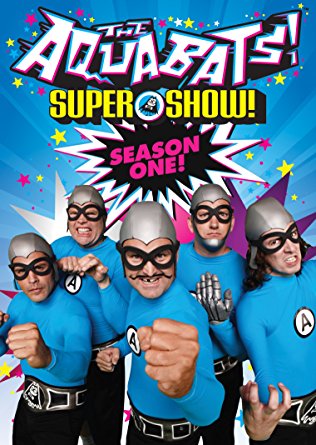
The Aquabats! Super Show! Season One! DVD Review

Yes, that’s right, there are two exclamation points in this show’s title, and three exclamation points in the title of the DVD. And, guess what, every single episode has an exclamation point in its title as well. That’s certainly a lot of exclaiming.  I usually despise exclamation points, except when they’re used for humor, when their very use is actually poking fun at their use. And that’s what the Aquabats are doing. Everything about this show is making fun of itself, like just by them doing something they’re poking fun at whatever it is. It’s an interesting feat, and one that could easily go very, very wrong.

Fortunately, it rarely does go wrong. Sometimes, yes, it can be rather stupid. But it’s all in good fun. And for me, the show seems to improve as it goes on, with the episodes on the second disc being better than those on the first. Or perhaps I simply succumbed to the show’s odd charm.

The Aquabats! Super Show! Season One! is a two-disc set that includes all thirteen episodes of the first season, along with some bonus features. Five of the episodes have commentary tracks.  The Aquabats are a band dressed as superheroes, and in this show they are superheroes – of a sort. Each episode features them battling some strange (and decidedly cheap-looking) monster. Each episode also has two cartoon segments. The first is a continuing story of the Aquabats going to an underwater city on the moon. The best bit about that cartoon is the narration, which is often hilarious. The second features Lil Bat. And every episode has a fake commercial. Some episodes have special guest stars, like Lou Diamond Phillips and Al Yankovic.

“Manant!” – The first episode of the first season opens with a montage of scenes “previously on the Aquabats! Super Show!” Perfect. The band is playing a party, singing how they’re not going to stop playing. The next day they haven’t stopped. That is, until a nearby explosion gets them into super hero mode. Manant is blowing up burger places. And the Aquabats are hungry and want to help.

 “Mysterious Egg!” – The Aquabats fight a creature that is a distant cousin of Snuffleupagus, perhaps combined with something out of the AD&D Monster Manual. Jimmy The Robot destroys it. Then when they find a giant egg, they tell Jimmy not to blow that up too. Each guy imagines what could be inside the egg, and each fantasy turns horrible, causing them to scream. My favorite is the egg as dance partner. Of course, the egg contains a man in a bird costume, like if Big Bird had gone all wrong in a parallel universe. (Too bad they blew up Snuffleupagus.) The song during the closing credits makes me laugh.

 “EagleClaw!” – In the opening montage, the furry monster from the previous episode shouts, “It’s a trap” like Admiral Ackbar. There’s a Star Wars reference in this episode’s cartoon too. Anyway, Eaglebones goes a little overboard in his guitar solo, and as  a result the fans all flock to him after the show, including one, EagleClaw, who gives him a bomb.

 “Laundry Day!” – After fighting garbage monsters at the dump, the Aquabats need to get their uniforms cleaned. But the crazy villain who created the garbage monsters has taken over the dry cleaners. The band sings a song about doughnuts. The best line is at the end, when Ricky says, “I’m going to try to relax a little more. But I need you guys to relax a little less.”

“Cowboy Android!” – The Aquabats are no help at all to some miners who have a monster problem. They do a song about not planning anything, then run out of gas in the desert. They find a town from the old west, run by a robot sheriff. I love the bit when he retrieves his fake mustache and affixes it to his metal face. There’s also a seriously cute blond extra in this episode (according to the commentary, she’s from Russia). This episode also features some stop-motion animation.

“Uberchaun!” – The Aquabats are playing golf. When Crash’s cell phone goes off, the commander scolds him, “Do you even know how important golf is to the world?” That’s great. And a few moments later he follow it with, “Golf is ninety-nine percent mental, one percent exercise.” The Aquabats are soon cursed by the Uberchaun after their ball hits him in the head. He gives them one hour to complete three challenges. This is a really fun episode.

“Pilgrim Boy!” – The Aquabats meet Pilgrim Boy, a man who is able to change shapes. But while they enjoy having him change into various objects, a giant creature is terrorizing the land. This episode is a play on those 1950s giant monster movies. And Al Yankovic guest stars as President Stuncastin (get it? if not, in the closing credits they even add the “t,” to make it Stuntcastin). I also like that the band’s version of fantasy football is a football videogame with wizards.

“Floating Eye Of Death!” – This episode features a fake ad for a Stoopid Fone, which is pretty funny. But by far my favorite bit from this one is the song about trucker hats. I absolutely love that scene.

“Night Of The Cactus!” – A meteorite hits in the desert, and a cactus reacts predictably – by becoming a monster and kidnaping a woman (yes, shades of King Kong). When the Aquabats reach the site of the crash, the commander says, “Ooh, I bet this thing’s full of science.” He touches it, and his arm turns monstrous (reminding me of that scene from Creepshow with Stephen King).

“Showtime!” – In the season’s final episode, the Aquabats are broke, and also sad because kids are more interested in other superheroes – Supermagic Powerman and Lanolin Lady. So they decide all they have to do is save the planet. But first they play a song. The aliens grab a little girl, and Supermagic Powerman (Al Yankovic) and Lanolin Lady arrive to save her. But the little girl turns evil, steals their magic amulet and kills them (proving once again it’s always best to open fire on little girls). I love that when Crash says, “This is for the children,” the alien creature responds, “Your children?” In this episode’s commentary track, they say they wrote the opening scene because the show was running out of money. Also, apparently there is a My Little Pony somewhere in that scene (I didn’t see it). Two previous members of the Aquabats make appearances in this episode.

Bonus Features

The bonus features include the show’s pilot, which also has a commentary track. The pilot is quite a bit different from the series. It still has a cartoon and a fake ad (two fake ads, actually), but the structure is different. The cartoon comes after the live-action plot has come to an end, rather than stuck in the middle somewhere. And the cartoon is nearly half the show. (I actually like this cartoon more than the ones in the series.) And there is concert footage shot at El Rey in Los Angeles.

There is also a five-minute blooper reel. And there is something titled Behind The Scenes!, but it’s not really a look behind the scenes. Instead it’s a lot of staged silliness.

This show stars Christian Jacobs as M.C. Bat Commander, Chad Larson as Crash McLarson, James R. Briggs Jr. as Jimmy The Robot, Richard Falomir as Ricky Fitness and Ian Fowles as Eaglebones Falconhawk.

The Aquabats! Super Show! Season One! is scheduled to be released on May 21, 2013 through Shout! Factory (yes, another exclamation point).

Blu-ray Review: The House With Laughing Windows

Right from the film's opening image of a man being tortured, murdered, The House With Laughing Windows is riveting. And as we are still...