Tuesday, January 7, 2014

Film Review: Maidentrip

Maidentrip is a completely engaging and warm documentary about Laura Dekker’s attempt to be the youngest person to sail around the world alone. She was fourteen when she set out on her journey in August of 2010, and all of the footage of her at sea was shot by Laura herself.

The film opens with footage that Laura shot of the supplies on her boat, focusing on water and food. We see the interior of her boat, and then she turns the camera on herself. In voice over, she tells us a bit about herself, including the fact that she was born on a boat and lived her first five years at sea. She does an excellent job of including herself in the footage she shot throughout the trip. And considering it’s a teenager holding the camera – a teenager whose passion is sailing, not filmmaking – the footage is shockingly good. It’s not too jumpy, a feat in itself, for it was shot on a boat.

The film focuses on her journey, but she had to go through another ordeal before even being able to set off on her trip. She says in voice over, “When I wanted to arrange my school the attendance officer sent Child Protection after me…They brought a court case against me and my parents.” The film includes some news footage regarding the case. It took nearly a year of battling in court before she won and started on her journey.

A title card then tells us: “Neither a follow boat nor a support team accompanied her.” And in case you think she’s way too mature for her age, she very soon shows us the kitchen in the boat, and it’s a mess, with pasta all over the floor, which works to endear her to us more.

And don’t worry – the film isn’t just footage of the oceans. She explains in voice over that she wasn’t attempting any sort of speed record. She wanted to see the world, to learn about other cultures. So we are treated to footage of the Canary Islands, St. Maarten, the Galapagos and other places. Her mother and sister visit her at one stop, and her father visits her at another point to help her repair the boat (and celebrate her sixteenth birthday).

The journey is also broken up by footage of her childhood, giving us more of a background and an understanding of why she wanted to do this. When her parents split up, she chose to live with her dad because he liked to sail while her mother didn’t.

But it is often the footage shot on the ocean which is the most compelling. When crossing the Atlantic, she talks to the camera about mixed feelings. At one point she is accompanied by some dolphins, and while filming them she expresses hope that they’ll stay with her for a while so she’ll have some company. And watching, you hope for the same thing. I couldn’t help but think that not only would it be exhilarating to make this trip, but it would also be terrifying because if you got sick of it in the middle, there would be no way to quit.

And yes, there are storms. The first rainstorm actually excites her. She says, “It’s really cool to see how the boat fights its way through the waves.” There is a truly adorable moment when she reaches the equator and offers a pancake to Neptune. On her first toss, the pancake lands on the deck of her boat.

Maidentrip was directed by Jillian Schlesinger, who also co-produced it with Emily McAllister. It was edited by Penelope Falk. The film features some excellent music written by Ben Sollee.

Maidentrip opens in New York on January 17, 2014.

Wednesday, December 11, 2013

DVD Review: Jayne Mansfield’s Car

Jayne Mansfield’s Car is an interesting and engaging family drama set in the south in 1969, when a death brings two very different, though perhaps equally dysfunctional, families together. It boasts a fairly incredible ensemble cast including Robert Duvall, John Hurt, Kevin Bacon, Robert Patrick, Ray Stevenson, Frances O’Connor, Ron White and Billy Bob Thornton, who also co-wrote and directed the film.

The film opens with a small anti-war demonstration in the town of Morrison, Alabama, while the two local cops look on. Meanwhile, the older folk are in a barber shop, discussing politics. Jim Caldwell (Robert Duvall) says, “You ought to have to be from here to run for office, the way I see it.” Another guy tells him, “Well, they’ve been here some forty-odd years, though, Jim.” Jim is then upset to learn that one of his sons, Carroll (Kevin Bacon) was the leader of the anti-war demonstration. He seems to be leaning pretty far to the right, so the sudden shot of Jim seated by a stream is completely welcome, for it makes us feel for him. It makes him more human.

This family has money. They live in a mansion. Skip (Billy Bob Thornton), one of the other sons, has a small collection of sports cars. But they are far from being trouble-free. Skip, though fifty years old, still lives at home. Jimbo (Robert Patrick), though married and with a son, also still lives at home. Jim lives partially in the past, harboring an anger, and also a morbid passion for car accidents. The family dynamic is almost immediately apparent during an early dinner scene at the house. Jim is interestingly quiet for the beginning of this scene, and he when he does speak, it’s to say basically what he said in the barber shop, which now simply comes off as rather sad instead of strong and indignant like the first time.

A phone call from England interrupts their dinner. Jim’s ex-wife – the mother to all of his children – has died and is going to be buried in Alabama. A death in the family is an easy way to make an audience feel for a group of people, but it’s really when Jim says, “She deserved to be with her people, don’t matter what she’d done to us” that you become involved and drawn in.

Sadly, the backstory of Naomi (Jim’s ex-wife) is provided by some clunky exposition by two supporting characters in a car. But that is one of only a very few weak moments in this film. Most of the scenes are strong, and work to develop the characters in this character-driven film. There is an early scene when Jim hears of a car accident over the radio and goes to see it. There is a nice moment when the two cops see him coming and exchange a few quick words before he arrives – “that son of a bitch shows up at every wreck there is,” “rich folks ain’t never got anything to do.” And as Jim gets closer, they greet him in a friendly manner. It’s a wonderful moment, showing perhaps that Jim doesn’t get the respect he thinks he does, and from the very people he’d expect it most. (It’s also interesting the order in which we’re given information. We’re allowed to develop our own opinion about Jim and his curiosity about accidents before learning that he actually was a medic in the first World War, so could actually provide some help in these situations.)

John Hurt plays Kingsley Bedford, Naomi’s second husband, who arrives for the funeral with his two grown children, Phillip (Ray Stevenson) and Camilla (Frances O’Connor). There is tension at first between the two families, who had never met before. But they then begin to get to know each other. Billy Bob Thornton is funny when he tells Camilla: “I like the way everything you say sounds. I wish I could speak English.” Actually, much of the film’s humor comes from their interactions. At one point he asks her straight out, “I was just wondering, sometime could we just slip off and you get naked and talk English and recite something, I don’t know, and just let me beat off to you.”

The film is really about these characters and their relationships. Often it’s the most quiet, most personal moments that are the best. For example, the scene where Jim asks Kingsley how he met Naomi is absolutely perfect and touching. The scene where Skip tells Camilla about the war is another excellent, quiet, intensely personal scene.

By the way, the film’s title comes from the car that Jayne Mansfield died in, a car that was shipped around to different towns where people could buy tickets to look at it.

Special Feature

The DVD contains one special feature, “Jayne Mansfield’s Car: Behind The Scenes,” which features interviews with Billy Bob Thornton, Robert Patrick, Ray Stevenson and Kevin Bacon. Billy Bob Thornton says the film is about how different generations view war, and it’s about “the romanticism of tragedy.” Robert Patrick talks about how they moved quickly on this film, doing between one and three takes. There is also some footage taken on the set.

Jayne Mansfield’s Car was released on DVD and Blu-ray on December 10, 2013 through Anchor Bay.

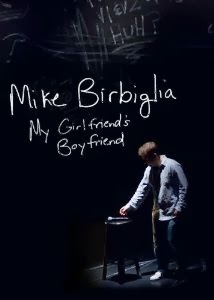
DVD Review: Mike Birbiglia: “My Girlfriend’s Boyfriend” (2013)

Mike Birbiglia’s new comedy special, My Girlfriend’s Boyfriend, proves what an amazing talent he has as both a storyteller and a comedian. Here he tells a great story, with wonderful detours and side roads but always coming back to the main thread at just the right moment. He even allows serious and sweet moments into his routine. The main story is his relationship to Jenny and how that has changed him. But the road he takes to get there is truly hilarious and often touching.

He starts by talking about how a few years ago everyone he knew started getting married. He starts with a somewhat general statement that I can relate to: “Sometimes when I think I am right about something, it can be a real source of tension between me and the person I’m arguing with, and the reason it’s a source of tension is that I’m right.” He talks about how he thinks marriage is insane, and mentions how fifty percent of marriages end in divorce. He adds: “That’s just first marriages. Second marriages, sixty to sixty-two percent end in divorce. Third marriages, seventy to seventy-five percent end in divorce. That’s a learning curve.”

But don’t worry – he can be romantic, like when he says, “From the moment I met Jenny, I knew I wanted to sleep with her at least once.” And: “I remember the first time I fell in love. It was in high school, it was that first time where you fall in love and you’re just like, ‘This is it, I found her, I’m seventeen years old and I’m done.’”  I love his material about failed attempts at kisses, and about seeing people making out. “Making out is just sloppy. It’s like watching a dog eat spaghetti.” He also mentions how the way women argue can be maddening. “That’s how Jenny argues things sometimes. She’ll just say, ‘That’s how I feel.’ And I’ll say, ‘That’s not an argument.’”

He also has some wonderful self-deprecating humor. “If I stare at the mirror, I get angry. Like I feel like I’m complaining about a bad call a ref just made. I’m like, ‘Come on! You’re blind if you’re leaving the house like that!’”

His bit about the Scrambler is brilliant, especially as he acts out the motion of being on that carnival ride. (I had a similar experience when I was a kid, trying to tell the guy to stop the ride each time we flew by him – unsuccessfully, as my friend proceeded to vomit onto us. I never went on that ride again.)

Of course, I love that he rips on Texas: “I was coming back from a five-day stint in Texas, which was awful, because it was in Texas.” And I love his rant against marriage, about bringing the government into a relationship, and how people who don’t believe at all in a particular religion will have the ceremony performed in a church.

He really only breaks once from his routine to directly address an audience member. He jumps off the stage to grab someone’s leg who is wearing no shoes. Only in Seattle.

This is a comedy performance that I think I’ll be returning to, as it’s really like a one-man play, with a true story arc and lots of wonderful moments along the way. In that way, it’s quite a bit different from most stand-up specials.

Special Features

The DVD includes a fifteen-minute behind-the-scenes documentary titled How To Make Whatever This Is. It begins with Mike Birbiglia on stage, talking about how he’d done this show so many times, and kept tinkering with it. Mike Berkowitz (Mike’s agent) talks to Mike about the show being good enough, and it being time to stop “fixing” it. There is footage of Mike Birbiglia on The Bob And Tom Show, as well as footage from an earlier performance of the show. Jen Stein talks about how the show has broken boundaries in her life. Mike talks about how it’s hard for him to leave this show behind; after all, this material is his life.

There is also some bonus footage. The first is a short bit cut from the show in which he interacts with an audience member, imitating the person’s pose in her chair. The second is a post-show question and answer session, in which he talks about his sleeping disorder and a bit about the performance. The third is Mike asking folks to turn off their phones at the beginning of the show. He does a great bit about how there is no customer service anymore, how it’s difficult to get a real person on the phone.

My Girlfriend’s Boyfriend was released on DVD on November 25, 2013 through New Wave Dynamics. The DVD is approximately 76 minutes. My Girlfriend’s Boyfriend was also released on CD, that disc being approximately 72 minutes. One thing that is cut is the bit where he points out the audience member who has no shoes or socks.

Wednesday, November 20, 2013

DVD Review: Berkeley In The Sixties

I’ve been fascinated by the 1960s since I was in my early teens. First, admittedly, it was the music, particularly the San Francisco bands and the British invasion. And then I became interested in some of the politics. (I’m truly happy to have been born in the same city as Abbie Hoffman.)  I’ve seen many documentaries about the 1960s, and have read extensively about the period, sucking up as much information as I could. And yet Mark Kitchell’s Berkeley In The Sixties presents a lot of footage I’d never seen before.

The documentary opens with a bang. It opens with footage from a demonstration in May of 1960, with the police turning the hoses on the protestors and dragging them down flights of stairs, all to the sound of Little Richard’s “Keep A Knockin’.” The demonstration was a protest against the House Un-American Activities Committee, and the film gives us footage inside the hearing where one witness says to the committee, “If you think I’ll cooperate with you in any way, you are insane.” How wonderful is that?

John Searle, one of the demonstrators, says (in one of the film’s many interviews): “Now the whole thing might have died down except for the fact that the committee made a film.” This was something of which I was unaware. And this documentary shows us a bit of the film, Operation Abolition, which I’d never seen. That film worked against the committee’s wishes and intentions, and actually radicalized many people, who then went to Berkeley.

And that’s the documentary’s opening. Just in those opening moments I’d seen new footage and learned a few new things about the 1960s, which of course set my expectations very high for the rest of the film. And those expectations were met.

The film documents the protest movements at the University of California at Berkeley, including the civil rights movement, the freedom Of speech movement, the anti-war movement, and the women’s liberation movement, and does an excellent job of showing how they were all related.

There are many interviews with those that were involved, including Susan Griffin (a SLATE member), Mike Miller (founder of SLATE), Michael Rossman, Jack Weinberg, Jackie Goldberg and Bobby Seale. What’s wonderful is that the film includes footage of these folks from the 1960s. For example, we see footage of Jack Weinberg in 1964 in the back of a police car, while demonstrators surrounded the car so it couldn’t leave. That’s actually some amazing footage, with a microphone set up on top of the police car so that people could address the crowd. Jack says he ended up sitting in that police car for thirty-two hours. We also see footage of Jackie Goldberg being interviewed in 1964 regarding the Free Speech Movement.

Again, as interesting as the interviews are, it’s often the archival footage that makes this documentary so strong. There is footage of that bastard Ronald Reagan attacking the Berkeley movement when running for Governor of California. There is some strange footage on a bus tour through San Francisco, with the bus driver reading from a script while driving. Geez, that’s a bit dangerous, as he points out the hippies. There is some great footage of the Grateful Dead performing “Viola Lee Blues” (I’m a huge fan of their music, so I particularly appreciated this scene).

The footage outside the induction center is incredible, and includes some stuff I’d never seen before. Also incredible is the footage of the helicopter spraying a peaceful demonstration while the cops (in gas masks) don’t allow the protestors to leave. That is some of the most angering and disturbing footage I’ve seen, and once again, it’s footage I had not seen before. What’s great is that this documentary doesn’t give just brief snippets, but allows the footage to play for a while. One of the protestors expresses the impotence they felt: “I don’t think we stopped one inductee…I don’t think we made one bit of difference that day.”

And that’s another thing I really appreciate about this film – the candidness of those interviewed about their own shortcomings and those of the various movements. The film celebrates the victories, but gives a more rounded and honest account.

Special Features

The DVD contains a lot of great bonus material. First, there is a lot of archival footage, labeled “Archival Gems.” These are unedited archival clips that were not used in the film. Each clip is preceded by a short description. Most of this stuff is great, including a shot during the Free Speech Movement Victory Celebration that is actually really funny. There is a shot of a Hells Angels press conference, in which Sonny Barger speaks against the anti-war demonstrators and confuses “guerrilla” and “gorilla.” I love the shot of Ken Kesey being interviewed at the entrance to the bus, Furthur. The bit with Robert Mitchum surprised me, as I never knew he was insane. He says, “If they don’t learn, kill ‘em. If they won’t be peaceful, kill ‘em.” Holy moly. The bit with Ronald Reagan didn’t surprise me at all, as the more I learn about him, the more I understand he was completely despicable, through and through.

The special features also include several deleted scenes, including more with that bastard Ronald Reagan who says in a speech, “They are a small minority of beatniks, radicals, and filthy speech advocates have brought shame on a great university.” He then goes on to rail against a dance and rock and roll and so on. It’s weird. The deleted scenes also include more from the interview with Bobby Seale, who talks about how they chose the name Black Panthers. And there is more footage from Chicago, 1968, including some news footage I’d never seen before. The deleted scenes also include the film’s original ending.

There is also a photo gallery, as well as the original theatrical trailer.

Berkeley In The Sixties was directed by Mark Kitchell, who more recently directed a documentary on the history of the environmental movement, titled A Fierce Green Fire (which has also been released on DVD through First Run Features). Berkeley In The Sixties was released in 1990, and released on DVD in December of 2002.

Saturday, November 16, 2013

DVD Review: All Is Bright

All Is Bright is such an interesting and unusual film, unusual in its pacing, its subject, its characters. It’s thoughtful and funny and even heartbreaking at times, and it features excellent performances by Paul Giamatti, Paul Rudd, and Sally Hawkins.

All Is Bright begins with Dennis (Paul Giamatti) walking into town after having been paroled (no one has cared enough to pick him up). He stops to sleep in a church, and for that shot the film’s score stops, as if to let him sleep. He reaches his destination at night, and there is an excellent shot where he sees his daughter through the window, then turns to the next window. As the camera pans over, we see a woman standing there, already aware of his presence (and none too happy about it). It’s a really nice shot, and the rest of the scene is just as strong. He’s about to knock, but she stops him by raising one finger. The film is silent at this point. She writes a note, and holds it up to the window: “I told her you were dead.”

She has him wait until their daughter is asleep and then comes out to him. She tells him he’s been dead for more than a year. It also comes out that she has been dating his friend, Rene, and is planning on marrying him. When he tells her he’ll stop being a thief for her, she responds, “What would be left of you?” And when he asks how he died, she says: “Cancer... You suffered. A lot.”

What a scene. It’s totally sad, intense, and funny in a deliciously screwed up way. And it establishes the character of Dennis so quickly and so firmly. Paul Giamatti has a way about him that makes you immediately empathize with whatever character he’s playing. You want things to turn out well for him, but for some reason it’s always so enjoyable to watch as things go wrong for him.

And things certainly go wrong for him in All Is Bright. When he learns there are no jobs to be had in his Canadian town, Dennis is forced to turn to Rene (Paul Rudd) for work, and Rene agrees to take him with him to sell Christmas trees in New York.

They set up shop on a street corner in New York, essentially living in the truck while they attempt to sell all of the trees they’ve brought. Dennis has to put up with the cold, with lack of sales, and with his wife calling his friend. He’s a man at the bottom who is trying to get back on track.

Helping him is Olga, played by Sally Hawkins. She is particularly wonderful in this film as a woman who works for rich dentists and befriends Dennis after purchasing a tree. Paul Rudd is quite good too, keeping Rene from being an obvious villain character. After all, we are set up to dislike his character, and yet he does make us feel for him. And we do see the friendship between him and Dennis. And it is partly their relationship that really draws us into this film.

The DVD contains no special features.

All Is Bright is scheduled to be released on DVD and Blu-ray on November 19, 2013 through Anchor Bay.

Saturday, November 2, 2013

DVD Review: The Colony

The Colony is a post-apocalyptic science fiction horror film, in which survivors of a new ice age band together against the elements, and against each other. It stars Kevin Zegers as Sam, the unlikely hero; Laurence Fishburne as Briggs, the conscientious leader of Colony 7; and Bill Paxton as Mason, a man who served with Briggs and now is perhaps going a bit mad.

The opening shots are of an underground bunker, eerily empty of people. Soon we become aware of distant sounds of distress, and then suddenly see two people running from someone or something. It cuts to the exterior of another bunker, where Hal, a sick man, is brought out into the snow. Against the protests of Sam, Mason executes Hal to keep him from infecting the rest of the colony.

This is a great way of establishing two of the main characters, as well as the situation they are up against. Sam gives us a bit of the background in voice over: “In this place, we live in fear of the common cold. The last flu wiped out twenty people in less than a week. So now we’ve got rules.” This is great, because we have more information than the characters. While they’re afraid of something so common, we know also there is something larger out there for them to fear. Sam’s voice over ends with the line: “But it’s not the cold we have to worry about – it’s each other.”

This group receives an S.O.S. from Colony 5, and Briggs leads a small team to check on those folks. Sam and a young, eager man volunteer to accompany Briggs. It’s a two-day journey for those three to reach the other colony, and they spend the first night inside an old helicopter, giving Sam and Briggs a chance to let us in on a little more of the characters’ back stories (and letting us know that they will have to stay there again on the way back).

When they reach Colony 5, there is blood in the snow leading to the entrance. And then there is a long ladder leading down inside. That’s frightening enough right there, because you know they’re going to have to climb back up – and you can only go so fast on a ladder. Once they get inside, the film gets a whole lot scarier. We know this is the place of the opening shot, where those two people were chased. We just don’t know yet what it was they were afraid of.

A knocking sound leads the three to a supply room, the door of which has been repeatedly banged and scratched at, as if someone or something was quite eager to gain access. Inside, the team finds a terrified survivor. They ask him, “Is anyone else alive?” He responds, “Define alive.” In addition to that cryptic response, he gives them hope by showing them a message the colony had received from someone who had fixed a weather tower, breaking a hole through the cloud layer.

But soon the Briggs and the other two learn what it was that frightened that couple in the beginning of the film, and need to make a hasty retreat themselves.

The film creates a wonderfully frightening atmosphere – the dangerous cold temperatures, the isolation, the fear of sickness, the claustrophobia of being underground most of the time. And then adds to that an extreme case of people losing their humanity. The film’s weakness is its reliance on CGI shots for most of the exteriors, some of which just don’t look believable.

Bonus Feature

The DVD includes “The Colony: Behind The Scenes,” which features interviews with Kevin Zegers, Bill Paxton, Laurence Fishburne, Charlotte Sullivan, Jeff Renroe (the director) and Pierre Gill (the director of photography). Laurence Fishburne says he hasn’t done anything this physical in a while, and that is one of the reason he said yes to this project. And we see a lot of the green screens used, and just how small some of the sets actually were. What’s more interesting, however, is the underground location shooting. This feature is approximately ten minutes.

The Colony was released on DVD and Blu-ray on October 15, 2013 through RLJ Entertainment.

Wednesday, October 23, 2013

DVD Review: In A Town This Size

In A Town This Size is a documentary about child abuse and the long-term effects it has had on the victims. The film relies almost entirely on a series of interviews, augmenting those only with a few still photographs. But really, nothing else is needed. The interviews themselves are completely engrossing and at times devastating.

We first meet the Dutcher family. Del and Dona Dutcher speak about their sons, Mike and Brandon, who were abused by their pediatrician, Dr. Bill Dougherty. Dona says that they thought of Bill as one of the family. “If we had a birthday party, we’d just automatically count Bill as one of the people on the party list,” she tells us. Christy, Mike and Brandon’s sister, talks about how Dr. Bill spent more time with her brothers than with her.

It is then that the filmmaker actually introduces us to Mike and Brandon. It’s interesting that we meet the other family members first, allowing them to set the scene and tone, and in the process making us worry more about the brothers. I couldn’t help but wonder if they were still alive, or if the abuse had led to suicide, or what. This is interesting, because just by ordering the interviews in that way, it gets the audience thinking about the long-term effects of child abuse, and how that childhood trauma might lead to serious troubles in their adult lives.

About Brandon, Dona says, “He said it’s not Dougherty’s fault. He didn’t do anything. He said, ‘It’s just me, I’m a terrible person.’” Brandon then tells us, “Ironically enough, I wasn’t really angry at him. I was angry at myself and the world and other people.”

We see childhood photographs of Brandon, and in them he looks incredibly sad. Dona talks about how she went back to look at all the photos once she knew about the abuse, and how the knowledge changed everything she felt about those photos. By the way, we also see a photo of Bill Dougherty with the boys.

This film is a very important and personal project for director Patrick V. Brown, for he too was abused by Bill Dougherty. During one of the interviews, he asks his subject if he knew about Patrick’s own abuse. That’s how we’re introduced to that information – an interesting way of doing it. Patrick then becomes one of those interviewed as well as the interviewer, telling the tale of his own abuse at his pediatrician’s hands.

We also meet Brown’s parents. His father, Tom Brown, talks about the respectability of Dr. Bill. He says that when the family moved to Bartlesville, everyone had told them they should take their kids to Dr. Bill. Bill is described by almost everyone as articulate, educated, friendly.

We meet several other people who were victims of Dr. Bill, including two who appear anonymously, in shadow. John Stinson says his abuse ended around the conclusion of seventh grade. Interestingly he says, “I think I outgrew him. I would have him go get us liquor.” One of the men who appear in shadow says he never told his mother about the abuse, even when she asked him straight out after a newspaper article had appeared. He says, “I could not have her thinking that that’s why I was gay.”

Most of those interviewed were child abuse victims, or family members of the victims. But there is also an interview with Dr. Richard Gartner, a psychoanalyst and author. He talks about how sexual orientation “is fairly well defined at an earlier age than most boys are in fact sexually abused.” He says that a man may “blame his sexual orientation on this experience of abuse. And that makes it almost impossible for him to have a good feeling about his own sexual identity. Because to feel okay about being gay means that in some way he’s letting his abuser wins.” This is one of the many fascinating aspects of this issue.

And there is an interview with Alan Carlson, who talks about the statute of limitations regarding child abuse. One has to bring a lawsuit within two years of the date of the alleged act. He then adds that there is a second possibility, that is to bring the lawsuit “two years from the date that the person discovered or reasonably should have discovered the injury or condition which was caused by the act.” One must also present proof that the victim psychologically repressed the memory of what happened, and there needs to be corroborating evidence. Obviously, that’s difficult to do.

One of the stated purposes of this documentary is to change the legislation regarding the statute of limitations. Be sure to watch the deleted scenes on the DVD for more information on that area.

Bonus Material

The DVD includes two deleted scenes, each being an interview. The first with is with Robert Owen, MD. His father was a pediatrician in Bartlesville at the same time as Dr. Bill. He talks about gossip in the town, and about how memories can by faulty, and that’s the reason for the statute of limitations. This is a perspective that’s not presented in the main body of the film, and is one worth thinking about. The second deleted scene is an interview with Congressman Earl Sears. Director Patrick V. Brown asks him directly about legislation regarding the statute of limitations, and Sears refuses to answer that on camera. The two deleted scenes total approximately eleven minutes.

The bonus material also includes a brief interview with Patrick V. Brown, in which someone off camera asks him why he’s making the movie. It is there he talks about the statute of limitations.

There is also a bonus feature titled “Epilogue,” which documents the film’s premiere and other screenings. It’s not all that interesting until we see one screening with a panel. There, one of the people who appeared in shadow in the film is in the audience, and he makes the decision right then to stop being anonymous. It’s a very moving moment caught on tape. This bonus feature is approximately ten minutes.

In A Town This Size was released on DVD on October 22, 2013 through First Run Features.

Blu-ray Review: The House With Laughing Windows

Right from the film's opening image of a man being tortured, murdered, The House With Laughing Windows is riveting. And as we are still...